Romila Thapar tears into UGC draft: ‘Curriculum risks dumbing down higher education’
By | Education | 25-Sep-2025 11:45:42
News Story
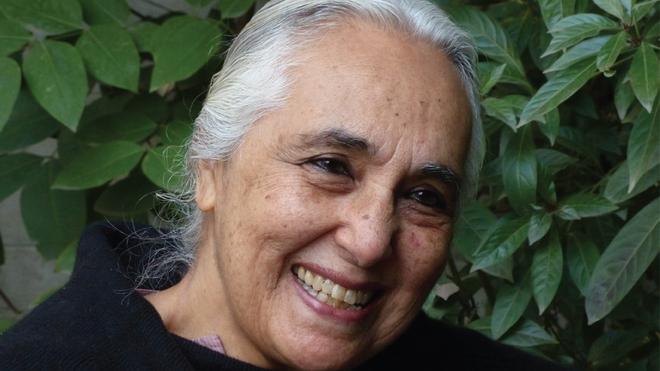
Eminent historian Romila Thapar has delivered a scathing critique of the University Grants Commission’s (UGC) proposed Learning Outcomes-based Curriculum Framework (LOCF), warning that it undermines university autonomy and risks reducing higher education to rote learning.
“The syllabus and what is to be taught and how in each discipline is the concern of the individual university and is not to be dictated to by the government,”
Prof. Thapar said, arguing that curriculum design requires advanced expertise that administrators and politicians simply do not possess.
Her remarks form part of Kerala’s official response to the Union Education Ministry and the UGC. She was a special invitee to the Prabhat Patnaik-led expert committee set up by the Kerala State Higher Education Council to examine the draft.
Prof. Thapar cautioned that the LOCF, in its current form, risks trapping students in a question-and-answer format that discourages critical inquiry. “Higher education is not about memorisation, it is about asking difficult questions,” she asserted.
On the UGC’s treatment of modernity, she pressed for a more nuanced framework that recognises its twin phases:
Europe’s 17th-century philosophical debates on rational thought, and the later transformations brought by industrialisation and colonialism.
Both, she argued, profoundly shaped India’s economic and social trajectory and must be studied critically.
The historian also expressed concern over the vague and uncritical framing of the ‘Indian Knowledge System’ (IKS) in the draft.
She criticised the reliance on texts like Kautilya’s Arthashastra without acknowledging the vastly different historical contexts across centuries.
“The Indian Knowledge System cannot be reduced to Hindu texts alone,” Prof. Thapar stressed. “Even when composed in Sanskrit, these works emerged in a world of intense intellectual exchange—across India, West Asia, Central Asia and China. Knowledge cannot be given either a geographical boundary or a religious origin.”
Her intervention adds weight to the growing criticism of the UGC’s draft, which many academics and state governments fear could dilute academic standards while centralising control over universities.