20 institutes join Centre’s ‘Gyan Bharatam’ mission to digitize India’s manuscript heritage
By | Education | 29-Oct-2025 10:28:52
News Story
In a major step towards preserving
India’s vast manuscript heritage, the Union Ministry of Culture has onboarded
20 institutions under its flagship Gyan Bharatam Mission — an ambitious
national drive to conserve, digitize, and disseminate the country’s ancient
knowledge systems.
Formalised through Memorandums of
Understanding (MoUs) signed on October 25, the first batch of participating
institutions includes the Asiatic Society in Kolkata, University of
Kashmir in Srinagar, Hindi Sahitya Sammelan in Prayagraj, and the Government
Oriental Manuscript Library in Chennai. Around 30 more institutes
are expected to join soon, officials said.
Announced in the Union Budget
2024–25, the Gyan Bharatam Mission seeks to systematically identify,
document, conserve, and digitally preserve India’s manuscript wealth
through a unified digital platform — the National Digital Repository (NDR).
The platform aims to make India’s ancient knowledge traditions accessible to
global audiences.
Under the initiative, institutions
have been classified as Cluster Centres and Independent Centres.
Cluster Centres will oversee conservation and digitisation work for themselves
and up to 20 partner institutions, while Independent Centres will focus on
their own collections.
The Ministry will provide funding,
technological infrastructure, and quality monitoring through third-party
verification. Each participating institution will establish a Gyan Bharatam
Cell dedicated to cataloguing, translation, conservation, and outreach,
serving as a coordination hub with the Mission.
Funding will be released in two
phases — 70% upon approval of the annual plan and the remaining 30%
after submission of progress reports, expenditure details, and quality
verification certificates.
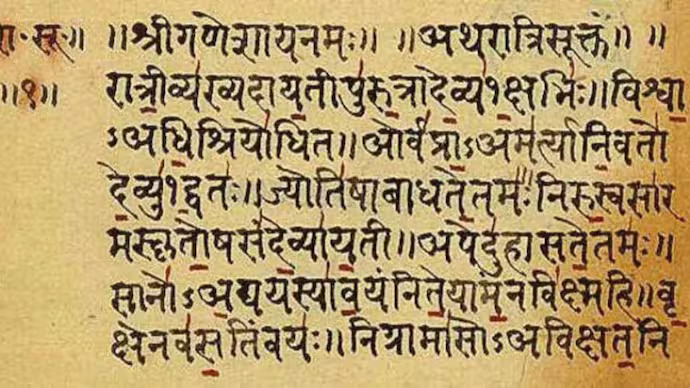
Last month, the Culture Ministry hosted its first international conference on Indian manuscripts titled “Reclaiming India’s Knowledge Legacy through Manuscript Heritage.” Officials said the Gyan Bharatam Mission builds on that effort, ensuring that India’s centuries-old intellectual and spiritual traditions, preserved in fragile palm-leaf and paper manuscripts, are safeguarded for generations and shared with the world.