Behind locked gates, dreams fade: How Odisha’s school closures push tribal children out of classrooms
By | Education | 01-Nov-2025 15:38:36
News Story
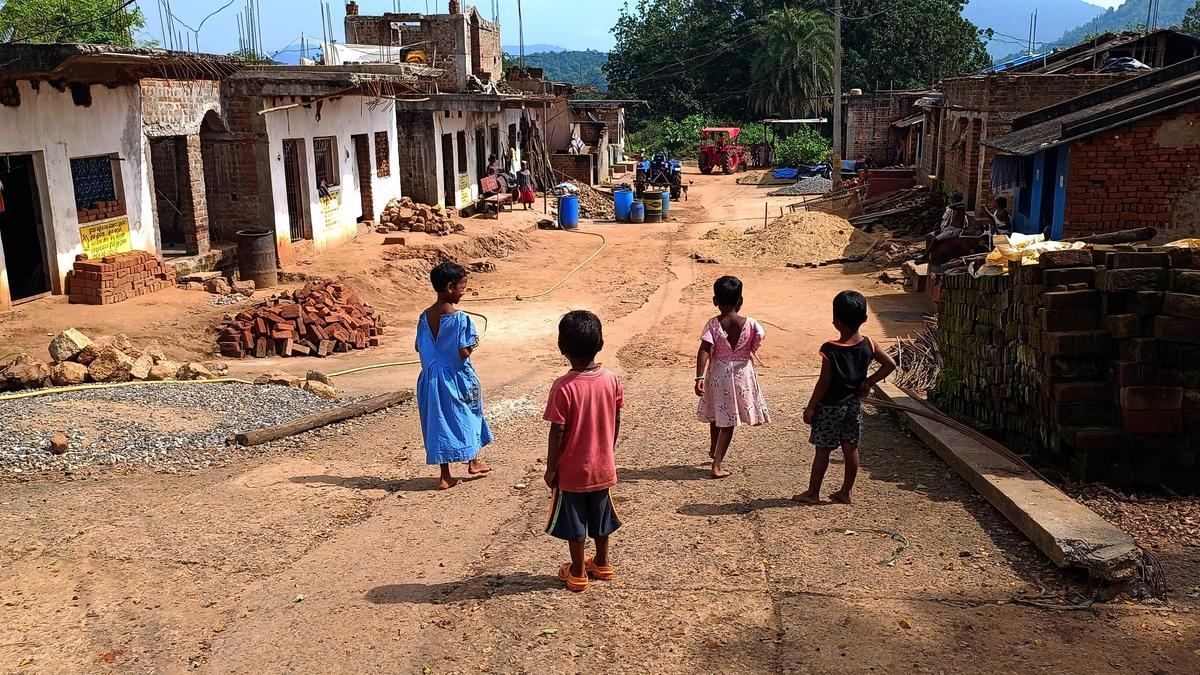
On a bright October morning in Karapadi, a remote village nestled in
Odisha’s Rayagada district, 45-year-old mason Laxman Kalaka bends over a half-built wall, his hands
caked with cement. A few yards away, his three young children — all under 13 —
loiter along the dusty road, their laughter echoing into the nearby forest.
None of them are in school.
One of them, barely a teenager, dropped out
after being ridiculed at a residential hostel. His six-year-old sister refuses
to walk the 1.5 km to the nearest school in another village. “Either I send my
daughter to a hostel and let her study on her own, or she remains illiterate,”
Kalaka says, his voice laced with frustration. “If our village school hadn’t
been shut down, my kids would have studied while staying with us.”
Schools turned storage rooms
Karapadi’s Government Primary School, once
alive with children’s chatter, was closed in 2017–18 under Odisha’s school rationalisation policy, which
mandated shutting schools with fewer than 20 students. Today, it serves as a
polling booth and a storage shed for villagers’ harvest.
Two kilometres away, Kumbia New Primary School stands locked too, its
classrooms repurposed for storing paddy during harvest season. “There are
enough children in the village,” says a local elder. “Only the schools are
missing.”
The story repeats itself across the tribal
heartland of Rayagada district —
from Madhuaguda to Sahada Gram Panchayat — where at least six schools have
vanished from a 60 sq km area since 2016–17. In Bissamcuttack block alone, 40
schools have been locked up; across Rayagada, nearly 400 have gone silent.
The policy of ‘rationalisation’
According to state data, around 10,000 schools have been closed or merged
since 2013 under Odisha’s school rationalisation and reorganisation drive.
School and Mass Education Minister Nityananda
Gond told the Assembly in March 2025 that 5,632 schools were closed in the last five years alone,
including 121 in Rayagada district.
The government says consolidation ensures
optimal teacher deployment and better infrastructure. But for families like the
Kalakas, “rationalisation” has meant the loss of the only accessible education
option.
Tribal children left behind
In these hilly, underdeveloped regions,
private schools rarely exist — leaving government institutions as the sole path
to literacy. When those disappear, the burden falls on residential schools run by the SC and ST Development
Department, which provide free uniforms, food, and accommodation.
But sending children as young as five to
hostels comes at a cost. “I know it’s too early, but I have no choice,” says Janes Urlaka from Hikiriguda village,
whose local school shut down a few years ago. “My daughter is learning to wash
her clothes — to prepare for hostel life.”
For Odisha’s tribal families, education has always been a fragile promise — one that slips further away each time another classroom falls silent.