AI to enter classrooms as CBSE drafts curriculum, NCERT set to finalise framework
By | Science | 12-Nov-2025 16:39:56
News Story
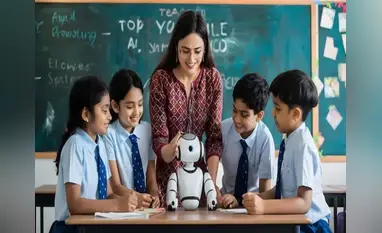
In a landmark move to prepare students for the digital future, the Central Board of Secondary Education (CBSE) has drafted India’s first artificial intelligence (AI) curriculum for Classes III to XII.
The draft, now awaiting
review and finalisation by the National Council of Educational Research and
Training (NCERT), aims to embed AI as a core element of classroom learning —
right from the foundational stage.
The initiative, guided by the philosophy of “AI for Public Good”, seeks to enhance the way children learn, think, and problem-solve by combining artificial intelligence with computational thinking (CT).
The integration is part of a broader national
effort to build ethical, future-ready learners equipped to navigate and shape
the evolving technological landscape.
Education ministry backs AI inclusion
The Ministry of Education’s Department of School Education & Literacy (DoSE&L) has reaffirmed its commitment to making AI and CT key components of school learning.
The department is
supporting CBSE, NCERT, Kendriya Vidyalaya Sangathan (KVS), Navodaya Vidyalaya
Samiti (NVS), and state education boards in developing an inclusive curriculum
aligned with the National Curriculum Framework for School Education (NCF-SE)
2023.
A high-level consultation held on October 29,
2025, brought together education bodies and experts, including Prof. Karthik
Raman from IIT Madras, who leads CBSE’s expert team on AI and CT curriculum
design.
A shift toward universal AI literacy
During the consultation, DoSE&L Secretary
Sanjay Kumar described AI education as a “fundamental,
universal ability connected to The World Around Us (TWAU)”. He underscored
the need for a broad-based, inclusive framework that nurtures each child’s
potential while aligning with India’s national education goals.
He also stressed that teacher training and resource development would be central to the initiative. Modules under the NISHTHA programme and other video-based resources will help educators adapt to AI-led learning environments.
A joint Coordination Committee of NCERT and CBSE
will ensure structured implementation, integration, and quality assurance
across schools.
Joint Secretary (I&T) Prachi Pandey called
for timely curriculum creation and rollout, noting the importance of aligning
with both national priorities and international best practices.
NCERT to anchor final framework
While CBSE leads the design and operational
aspects, NCERT will take charge of refining and integrating the final AI
curriculum within the national framework. CBSE’s role will remain focused on
execution and delivery in its affiliated schools, while NCERT will provide
pedagogical guidance, materials, and teacher support.
Together, the two institutions aim to make AI not just a subject, but an essential life skill — shaping classrooms where technology becomes a tool for creativity, ethics, and collective good.