India makes its boldest quantum push yet with funding for 100 new campus labs
By | Education | 26-Nov-2025 19:49:11
News Story
In a significant step toward
building a homegrown quantum technology ecosystem, the government will fund 100
engineering colleges with ₹1 crore each to establish dedicated quantum research
and teaching laboratories, senior officials announced on November 24.
The initiative is aimed at
integrating quantum science into undergraduate learning and accelerating
innovation under the National Quantum Mission (NQM).
Department of Science and Technology
(DST) Secretary Prof. Abhay Karandikar said the government has already received
over 500 proposals from institutions. “We are going to set up teaching labs in
hundred engineering colleges and institutions for teaching undergraduate minor
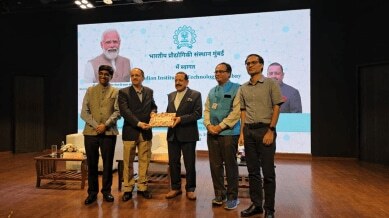
programs,” he said during an event at IIT Bombay.
Alongside the lab programme, DST is also
creating a quantum algorithms technical group to strengthen talent pipelines,
equip startups, and advance technology development.
Karandikar noted that IIT Bombay
continues to play “a key leadership role” in India’s quantum drive, citing
advances made by its Technology Innovation Hub — including support for
startups, development of new technologies, and the ongoing work to build
Indian-language large language models.
All four hubs under the National
Quantum Mission — IISc Bengaluru, IIT Madras, IIT Delhi, and IIT Bombay — have
recorded “impressive progress,” with IIT Bombay’s quantum sensing hub standing
out, the DST chief added.
Union Minister for Science and
Technology Dr. Jitendra Singh also announced the establishment of two
state-of-the-art quantum fabrication and central facilities at IIT Bombay and
IISc Bengaluru, backed by a combined investment of ₹720 crore. The centres will
focus on indigenising the fabrication of quantum computing chips and quantum
sensors — a capability India currently depends on foreign facilities for.
Two additional smaller fabrication
centres will be set up at IIT Delhi and IIT Kanpur.
“These facilities will be accessible
to academia, industry, startups, MSMEs and strategic sectors. They will
fast-track technology development, prototyping and small-scale production,
especially for startups,” Singh said.
The minister emphasised that the
investments would strengthen Indian capabilities in quantum computing, sensing,
superconductivity, cryogenic engineering, healthcare technology, photonics and
green energy devices.
Singh also highlighted the
commissioning of a new cryogenics facility equipped with a helium recovery
system that can reduce the cost of cryogenic experiments to nearly one-tenth while
conserving a critical global resource.
“As demand for quantum computers
grows worldwide, India must simultaneously strengthen its cryogenic
infrastructure,” Singh said, calling the developments a marker of India’s
expanding leadership in frontier science.
He added that IIT Bombay’s trajectory showcases how coordinated action between government, academia and industry can help build a world-class scientific and technological ecosystem capable of shaping the future.