Chile bans smartphones in classrooms to rebuild student focus and real-world connection
By | Education | 06-Dec-2025 13:55:37
News Story
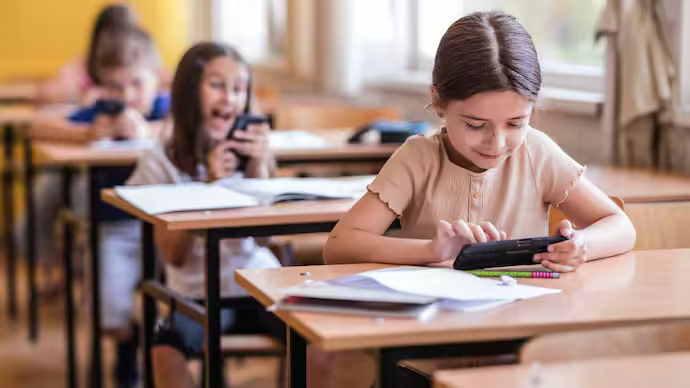
Chile has taken a decisive step in the global debate over technology in schools, approving a nationwide ban on smartphone use for elementary and middle school students during class time.
The move, aimed at restoring focus and strengthening face-to-face
interaction, comes amid mounting concern over digital distraction and its
effects on learning, mental health, and social behaviour.
The legislation — which now awaits President
Gabriel Boric’s signature — is set to take effect at the start of the 2026
academic year. Once implemented, students will no longer be permitted to use mobile
phones or internet-enabled devices during lessons, except in medical
emergencies or where explicitly required for educational purposes.
The bill passed Chile’s lower house with overwhelming support after an earlier approval in principle from the Senate, signalling rare political consensus around the urgency of the issue.
Rising concern over attention, screen time, and childhood behaviour
The ban follows years of frustration voiced by
teachers and parents who say unchecked device use has reshaped classrooms — and
not for the better. They argue that constant notifications, messaging, and
social media access fracture attention spans, erode social interaction, and
worsen learning outcomes.
Momentum for the law accelerated after a
Santiago school tested a phone-free programme requiring students to lock their
devices in signal-blocking pouches throughout the school day. Administrators
reported striking behavioural shifts: students rediscovered conversations,
outdoor play, reading, and sports, spending significantly less time scrolling
through social media feeds.
International assessments echo these findings — more than half of Chilean students surveyed say smartphones interrupt their learning, a pattern mirrored across global education studies.
A growing global movement
Chile joins a fast-expanding list of countries
tightening rules on digital devices in schools. A major international education
monitor reported this year that 79 systems worldwide now impose restrictions of
some form.
European nations — including France and the
Netherlands — have already adopted strict bans, with policymakers arguing that
classrooms must remain spaces designed for attention, safety, and meaningful
interaction.
Supporters of Chile’s decision say similar benefits could follow: fewer distractions, improved learning focus, reduced cyberbullying, and more mindful tech habits. Critics, however, warn that blanket bans may limit opportunities to teach responsible digital citizenship and restrict legitimate educational uses of technology.
‘A cultural change’
Education Minister Nicolás Cataldo called the
measure part of a necessary paradigm shift.
"With
the regulation of cell phone use in classrooms, we are advancing a cultural
change for children and adolescents who today need, more than ever, to see each
other face to face, socialise during recess and regain concentration to further
boost learning," he said.
Parent groups and school officials have largely welcomed the move, calling it long overdue.
Next steps
Once signed, the law will give schools roughly
one year to develop procedures, enforcement policies, and communication plans
for families ahead of the 2026 rollout.
By the end of 2024, an estimated 40% of the
world’s education systems had already adopted a smartphone limit — a figure
expected to rise as concerns grow over digital dependency, declining attention
spans, and student well-being.
With this legislation, Chile positions itself firmly among nations pushing for a reset — a shift away from constant digital connectivity and toward learning environments where young people look up, speak to one another, and reconnect with the world beyond their screens.