Missiles over Dubai: Gulf war jolts UAE’s neutrality as airports fall silent
By | International | 01-Mar-2026 12:03:21
News Story
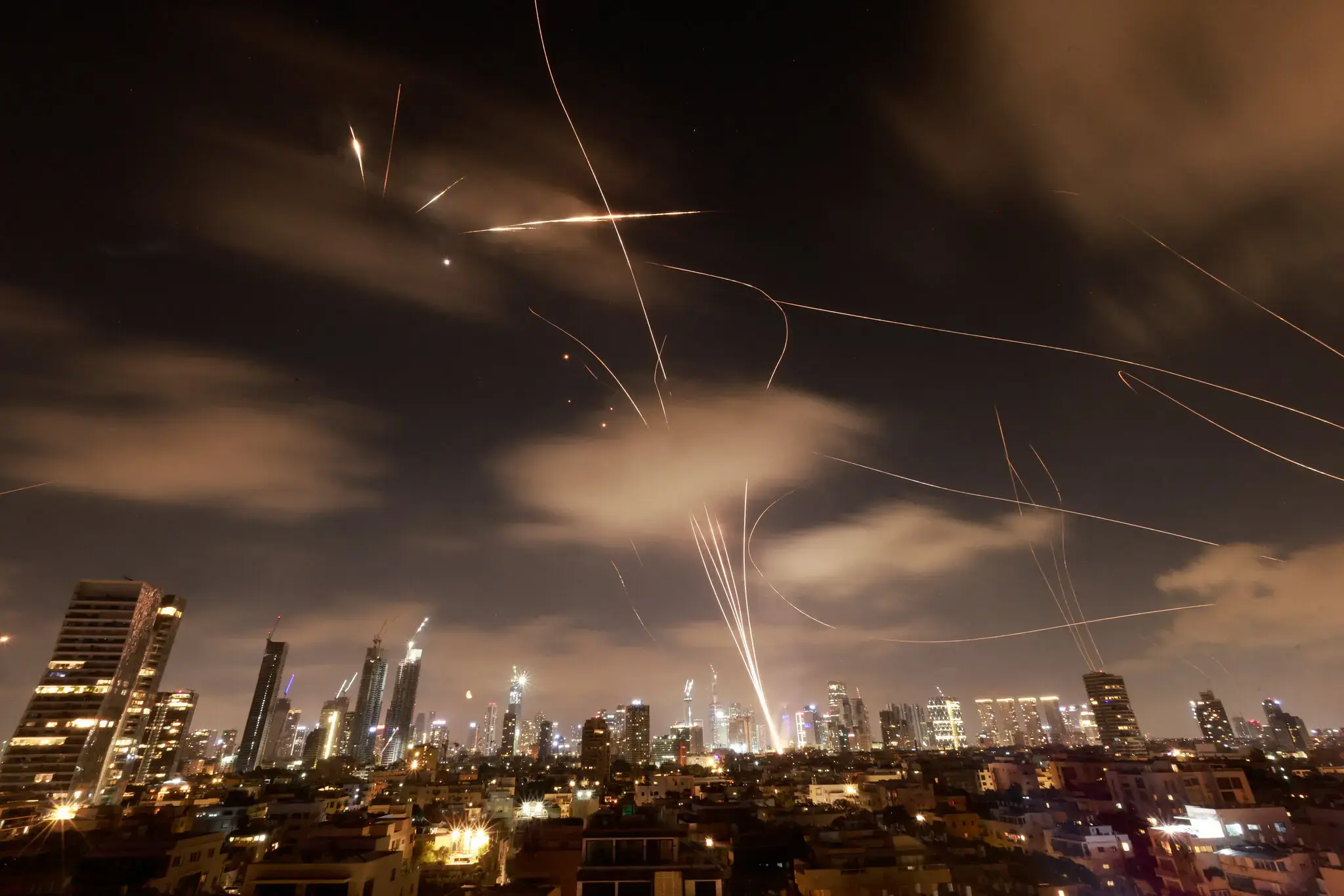
Missiles arced across Gulf skies and brought global aviation to a halt as
the expanding confrontation between the United States, Israel and Iran spilled
into the United Arab Emirates, shuttering the world’s busiest international
transit hub and exposing the fragility of the region’s stability.
Dubai
International Airport suspended operations on February 28 after
coordinated US and Israeli strikes on Iran triggered retaliatory fire from
Tehran. More than 700 flights were cancelled, with services halted indefinitely
at both Dubai International and Al Maktoum
International Airport — also known as Dubai World Central.
Dubai, long marketed as a neutral sanctuary for
commerce and connectivity, found itself abruptly drawn into the widening war.
Videos circulating on social media showed
flames at the five-star Fairmont The Palm in Palm Jumeirah, underscoring how
swiftly the regional confrontation reached the Gulf’s commercial nerve centre.
Among those stranded were Indian badminton
star PV Sindhu and Italy’s Defence
Minister Guido Crosetto, as cascading
airspace closures rippled across West Asia.
As the Israel-US-Iran confrontation intensifies, scrutiny is mounting over where the United Arab Emirates stands — and how its web of strategic relationships shapes its options in an increasingly combustible landscape.
UAE-Israel ties: Pragmatism over politics
The UAE became the first Gulf Arab state to
normalize relations with Israel under the US-brokered Abraham Accords in 2020. The accord marked only
the third Arab-Israel peace agreement since 1948, following treaties signed by
Egypt and Jordan.
Abu Dhabi’s key condition was that Israel
suspend plans to annex parts of the West Bank. Then Israeli Prime Minister Benjamin Netanyahu said the proposal had been
suspended, though not permanently scrapped.
For many Muslim-majority nations,
normalization with Israel carries political and reputational costs. For the
UAE, however, strategic concerns over Iran, expanding trade prospects with
Israel, and deepening security cooperation with Washington outweighed regional
hesitations. Bahrain and Morocco soon followed suit.
After the Gaza war erupted in 2023, the UAE publicly criticized Israel and dispatched humanitarian aid to Gaza, but stopped short of severing ties. According to the Doha-based Middle East Council on Global Affairs, the UAE is now Israel’s largest Gulf trading partner, with bilateral trade reaching $3.2 billion in 2024 — an 11% increase over the previous year.
Strategic anchor: Deep security partnership with
Washington
The UAE’s alignment with the United States
remains central to its defense posture. A Library of Congress report designates
the UAE as a US “major defense partner,” hosting American forces and acquiring
advanced US military systems, including missile defence platforms and combat
aircraft.
Between 1950 and 2023, Washington executed
more than $33.8 billion in Foreign Military Sales to the UAE, making it the
11th-largest US defense customer globally by value.
At the heart of this partnership lies Al Dhafra Air Base, south of Abu Dhabi. The base
hosts the US Air Force’s 380th Air Expeditionary Wing, comprising 10 aircraft
squadrons and drones such as the MQ-9 Reaper. It functions as a critical
operational hub and is shared with the UAE Air Force.
Al Dhafra also accommodates airborne early
warning and control aircraft, intelligence, surveillance and reconnaissance
platforms, and aerial refueling units. The Gulf Air Warfare Center, based
there, provides region-specific military training to roughly 2,000 personnel
annually.
Meanwhile, Jebel Ali Port and other UAE ports routinely host US Navy vessels, providing key logistical support in the Gulf.
A narrowing space for neutrality
The UAE has carefully cultivated its image as
both a commercial crossroads and a diplomatic bridge in a fractured region. Yet
as direct confrontation between Iran, Israel and the United States intensifies,
the space for calibrated neutrality appears to be shrinking.
With deep security ties to Washington,
expanding economic links with Israel, and geographic proximity to Iran, Abu
Dhabi faces one of its most complex strategic calculations in years.
For
now, Dubai’s darkened runways stand as a stark reminder: in a region at war,
even the world’s busiest gateway is not beyond reach.