Airstrike horror in Iran: 160 schoolgirls killed in strike on Minab
By | Education | 05-Mar-2026 12:11:29
News Story
A devastating airstrike in Iran’s southern city of Minab has left at least 160 schoolgirls dead, raising disturbing questions about civilian casualties in a military operation reportedly aimed at crippling Iran’s nuclear programme and eliminating senior leadership.
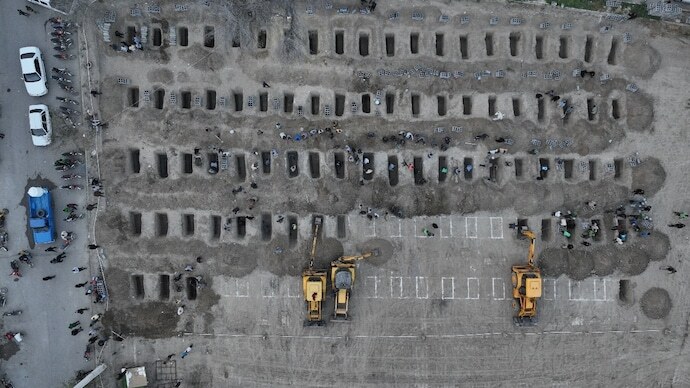
The victims, aged between seven and twelve, were students of Shajareh Tayyebeh School. Their bodies were buried in rows of fresh graves in Minab, a port city located near the Sea of Oman and the Strait of Hormuz, more than 1,300 kilometres from Tehran.
The strike, attributed to a joint US-Israeli operation, was intended to weaken Iran’s strategic infrastructure and target key figures within its military establishment, including Supreme Leader Ayatollah Ali Khamenei, according to Iranian officials and international reports.
But instead of senior commanders, the attack devastated a school campus.
Civilian deaths ignite controversy
The incident has triggered outrage in Iran and renewed debate globally over civilian casualties in modern warfare.
Iran’s Foreign Minister Seyed Abbas Araghchi condemned the strike, accusing Washington of disguising military aggression under the language of “rescue” and “liberation”.
Critics say the deaths expose the human cost of high-precision military operations that often fail to spare civilians.
Washington, however, has said it is “looking into the incident.” When questioned about the Minab strike, US Secretary of State Marco Rubio defended the broader campaign against Iran, describing Tehran as a “terror state”.
Questions over intelligence and targeting
The strike has also raised questions about intelligence accuracy.
The CIA and Mossad, widely regarded as among the world’s most capable intelligence agencies, reportedly tracked the movements of Iran’s leadership during the operation. Yet the presence of hundreds of schoolchildren in classrooms appears to have gone unnoticed.
Reports by The Guardian and The New York Times suggest the school was located near facilities linked to Iran’s Islamic Revolutionary Guard Corps (IRGC), particularly its naval branch.
However, mapping analysis shows the IRGC’s Asef Guards Barracks lies nearly six kilometres from the school, raising doubts about the justification for the strike.
The closest known IRGC-linked sites in the vicinity include a naval medical clinic and the Seyyed al-Shohada Cultural Complex, according to international reports.
A region scarred by civilian casualties
The tragedy has once again highlighted the toll of conflicts across West Asia, where civilians — especially children — often bear the brunt of geopolitical rivalries.
Human rights groups note that the killing of children has become a recurring feature of wars in the region, from Gaza to Yemen, fuelling accusations of double standards in international responses to civilian deaths.
While Iran itself faces criticism for its domestic repression and harsh treatment of women, analysts argue that the conduct of powerful states in war must also face scrutiny.
A grim reminder
For the families in Minab, the debate over strategy and geopolitics offers little comfort.
Rows of freshly dug graves now mark the loss of dozens of children whose school day ended in catastrophe.
Their deaths serve as a stark reminder that in modern conflicts, even classrooms — places meant for learning and safety — are not always beyond the reach of war.