Women sarpanches lead a quiet revolution in India’s villages
By | National | 08-Mar-2026 11:46:44
News Story
While International Women’s Day often
highlights corporate leaders, politicians and celebrities, some of India’s most
profound transformations are unfolding far from the spotlight — inside village
panchayats where women leaders are reshaping everyday life.
Across rural India, women elected to local
governance roles are turning sanitation, waste management and public health
into community-led movements. Their work shows that development is not merely
about building infrastructure; it is about leadership, trust and sustained
engagement with communities.
Stories from villages in Uttar Pradesh and Bihar
illustrate how grassroots women leaders are driving change that reaches every
household.
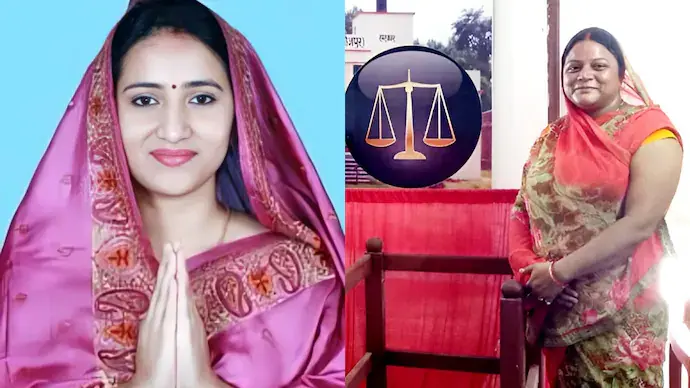
Priyanka
Tiwari tackles plastic waste in UP village
When Priyanka
Tiwari became the Gram Pradhan of Rajpur village in Hathras district of Uttar Pradesh in 2021, she inherited a challenge
common to many rural communities.
Plastic waste littered streets and fields,
awareness about hygiene was limited, and the village lacked any organised waste
management system.
Instead of relying solely on clean-up drives,
Tiwari focused on transforming community behaviour. She launched awareness
campaigns in schools and neighborhoods, urging residents to segregate household
waste and reduce the use of single-use plastics.
Regular community meetings and outreach
gradually built participation. As residents began cooperating, Rajpur
introduced a structured solution — a plastic waste management unit along with
“plastic banks” across the village.
Households now collect plastic waste and
deposit it in these banks, turning what was once discarded litter into a
managed resource.
The initiative has not only improved
sanitation but also strengthened the village’s financial sustainability. Today,
Rajpur is recognised nationally as a model of community-led waste management
and circular resource use.
Equally significant is its social impact: the
effort has demonstrated how women’s leadership can link environmental
sustainability with economic opportunity.
Shushum
Lata advances sanitation and menstrual health in Bihar
Hundreds of kilometres away in Bhojpur
district of Bihar, another woman leader
has led a similar transformation.
Shushum Lata,
the elected Mukhiya of Dawa Gram Panchayat, faced multiple challenges when she
assumed office. Open defecation remained widespread, waste management systems
were weak and awareness around hygiene was limited.
Through sustained community mobilisation and behaviour-change
campaigns, the village achieved open-defecation-free status. But Lata’s work
did not stop there.
Under the next phase of the Swachh Bharat Mission (Grameen), the panchayat
established systems for solid and liquid waste management that convert
household waste into organic manure.
Local farmers now use this manure in their
fields, creating a circular system in which waste becomes a resource for
agriculture while also strengthening local livelihoods.
For Lata, sanitation was not only about toilets
and waste systems. It was also about dignity and health.
Recognising that many rural women lacked
access to safe menstrual products, she helped establish a sanitary napkin
manufacturing unit run by members of local self-help groups. The facility produces
affordable, biodegradable pads.
Women associated with the unit also serve as
menstrual health ambassadors, spreading awareness in neighbouring communities
and helping dismantle long-standing taboos around menstruation.
The impact extends beyond health. The
initiative has created livelihoods for local women and improved school
attendance among girls who earlier missed classes during their menstrual
cycles.
At the same time, neglected village spaces
have been transformed into marketplaces and public areas, encouraging greater
community participation in sanitation and waste services.
Why
women’s leadership matters
The efforts of these leaders reflect a broader
shift underway across rural India.
Under initiatives such as the Swachh Bharat Mission (Grameen), sanitation has
evolved from a government-driven infrastructure project into a people-led
movement — with women leaders playing a pivotal role in driving behavioural
change.
Across many communities, women in governance
roles tend to prioritise issues that directly affect daily life, including
health, education and environmental cleanliness.
Their leadership often connects development
with long-term wellbeing — ensuring cleaner surroundings, improving sanitation
access, supporting girls’ education and promoting sustainable use of local
resources.
Equally important, women leaders often command
greater trust within communities, helping shift practices that have persisted
for generations.
A
quiet grassroots transformation
The journeys of Priyanka
Tiwari and Shushum Lata highlight
how grassroots leadership can reshape everyday life in India’s villages.
Cleaner streets, organised waste systems,
improved health for women and girls, and new livelihood opportunities may seem
modest individually. Together, they represent a profound shift in rural
governance.
This International
Women’s Day, their stories underscore a powerful truth: some of India’s
most influential changemakers are not on national stages.
They are in village panchayat offices, schoolyards and community meetings — quietly turning local challenges into lasting solutions.