CBSE Maths paper QR code ‘rickroll’ sparks viral buzz, raises questions on exam security
By | Career | 12-Mar-2026 11:55:08
News Story
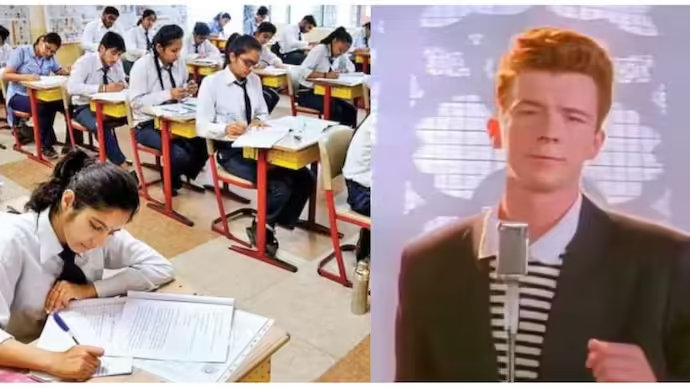
In an unexpected twist during the Class 12 board examinations, a QR code
printed on the Mathematics question paper reportedly redirected some students
to the music video of Never Gonna Give You Up
by Rick Astley, triggering a viral
“rickroll” moment online and raising questions about the security features
built into exam papers.
The incident occurred during the Central Board
of Secondary Education (CBSE) Class 12 Mathematics and Applied
Mathematics examination held on March 9, 2026. Students reported that scanning
the QR code printed on the question paper led them to the famous 1987 music
video on YouTube.
The prank-like redirection mirrored the
well-known internet phenomenon called a “rickroll”, where users expecting one
type of content are unexpectedly redirected to the classic pop song instead.
Images and short clips of the question paper quickly spread across social media, prompting a mix of humour, confusion and concerns about exam security.
What exactly happened in the maths exam?
The Mathematics exam was conducted from 10:30
am to 1:30 pm. Students noticed a QR code printed on the question paper — a
feature that has been included in CBSE exam papers for several years as part of
security measures.
However, when scanned by some students after
the exam, the code allegedly opened the music video of “Never Gonna Give You
Up”, effectively “rick rolling” users.
Screenshots and videos showing the QR code scan circulated widely online, turning the incident into a viral talking point among students and educators alike.
What CBSE said about the viral QR code
CBSE clarified that the question papers were
authentic and that the integrity of the examination process had not been
compromised.
The board stated that exam papers carry
multiple security layers and that QR codes are designed primarily to help
verify authenticity and track question paper distribution in case of suspected
leaks.
Officials said the matter is being examined and that safeguards will be strengthened to ensure similar issues do not occur again.
Why QR codes are printed on board exam papers
QR codes were introduced in CBSE question
papers around 2018 as part of a broader system aimed at preventing exam leaks
and verifying paper authenticity.
They serve several functions:
·
Authenticity
verification: Helps authorities confirm that a question paper is
genuine
·
Security
tracking: Enables monitoring of paper distribution in case of
suspected leaks
·
Digital
validation: Allows quick verification through official systems if
questions about the paper arise
In effect, the QR code works like a digital fingerprint embedded in the exam document.
Could the same happen in the English paper?
Following the viral episode, many students
joked online about whether the upcoming Class 12 English exam might also lead
to another “rick roll”.
Experts, however, say such fears are largely
exaggerated. QR codes on exam papers are security tools and are not meant to
link students to online content during the examination.
The redirection is believed to be the result of a misconfigured or unintended link rather than a deliberate feature. CBSE has also assured that the incident is under review.
Why the incident matters beyond the meme
While the episode generated widespread humor
online, it also highlights a larger issue in modern exam administration — the
growing reliance on digital verification tools.
As educational institutions increasingly
integrate technologies like QR codes to protect exam integrity, strict
monitoring and quality checks become critical.
The viral moment also demonstrates how quickly
internet culture can intersect with formal systems such as board examinations.
What began as a light-hearted “rick roll” may have amused students, but it has also sparked a broader conversation about the role of technology in securing high-stakes exams.