Middle East war hits Indian kitchens: Hostels ditch rotis as LPG shortage forces rice-heavy menus
By | National | 12-Mar-2026 12:23:15
News Story
The fallout of the escalating conflict in the Middle East is now being felt
far from the battlefield — in college hostels and paying guest kitchens across
India. As disruptions in global fuel supplies strain cooking gas availability,
many institutions have begun cutting gas-intensive dishes such as rotis, dosas
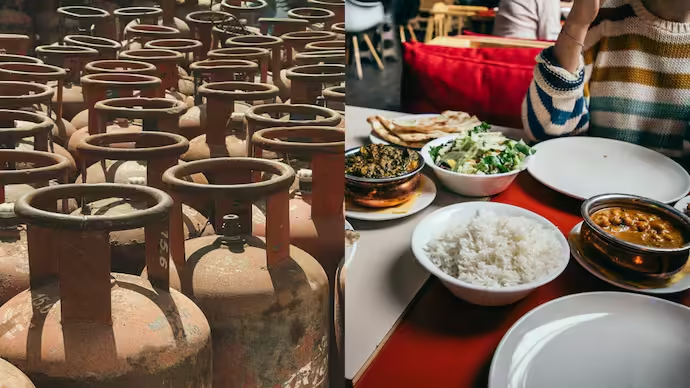
and fried breakfasts, replacing them with rice-heavy meals and baked snacks.
Rising volatility in oil and gas markets
triggered by the conflict between Iran and Israel
has begun to affect liquefied petroleum gas (LPG) supplies used by
institutional kitchens. With deliveries turning irregular and prices climbing,
hostels and mess facilities are rationing fuel and reworking menus to keep
meals running for students.
Across several cities, hostel messes report
that items requiring prolonged stove use — such as rotis, parathas, dosas and
deep-fried snacks — are being reduced or removed entirely. Commercial kitchens
and catering units have also warned of tighter supplies for institutional
cylinders.
Hostels
ration gas, rethink menus
In many hostels, kitchen managers say
switching to rice-based meals helps conserve precious cooking fuel.
A hostel mess manager at a boarding school in Lucknow
said moving from rotis and fried breakfasts to rice and baked snacks
significantly cuts LPG consumption.
“We are trying our best, but if we are not
able to manage, we may even have to declare a holiday for students,” the
manager said.
Rice can be cooked in bulk with fewer
reheating cycles, while bakery items sourced externally reduce dependence on
in-house gas use.
In Chennai, the Tamil Nadu IT
Hotel and PG Owners Welfare Association issued a notice warning
of a shortage of LPG cylinders and announcing drastic menu changes. The notice
said tea and coffee preparation would be halted, while gas-heavy dishes such as
chapati and dosa would be discontinued.
Side dishes like kurma and sambar have also
been curtailed, with chutney being served instead. The notice added that
varieties of rice would be increased to compensate for the changes.
Students
feel the shift
Students across major cities say the impact is
already visible in their daily meals.
In Bengaluru, a fourth-year law
student said his college mess has already stopped serving dosa and may soon
remove rotis from the menu.
A college mess in Pune
acknowledged facing LPG supply difficulties and said it had begun relying more
on ovens and induction cooktops to manage meals.
In Chennai, a final-year student
described how his hostel has moved to a rice-dominated menu.
“My hostel mess has increased rice servings
and reduced rotis, and they have also stopped parathas,” he said. “Rotis are
now served only on alternate days and most meals are rice-heavy.”
Meanwhile, a PG association in Bengaluru
issued a notice declaring “no dosa, no poori” until supplies stabilize.
Broader
impact of the fuel squeeze
Energy analysts say the regional conflict has
disrupted tanker routes and strained supply chains in global oil and gas
markets, creating ripple effects in import-dependent countries such as India.
While authorities are working to secure
alternative fuel supplies and prioritize household LPG consumption,
institutional users such as hostels, restaurants and catering units remain
particularly vulnerable to supply fluctuations.
Mess committees in several colleges say they
are coordinating with local bakeries and suppliers to keep meal services
running, while administrators plan to review menus weekly depending on gas
availability.
For now, students across campuses are adjusting to fewer rotis and fried treats — and a lot more rice — as kitchens wait for fuel supplies to stabilize.