From Mughals to memes: CBSE History paper QR code ‘links’ to Orry, sparks viral storm
By | Career | 01-Apr-2026 16:52:47
News Story
In a twist that has left students amused and social media buzzing, the
Central Board of Secondary Education (CBSE) finds itself at the centre of yet
another viral moment—this time involving a Class 12 History question paper and
an unexpected brush with internet celebrity.
Days after the Class 12 Mathematics paper
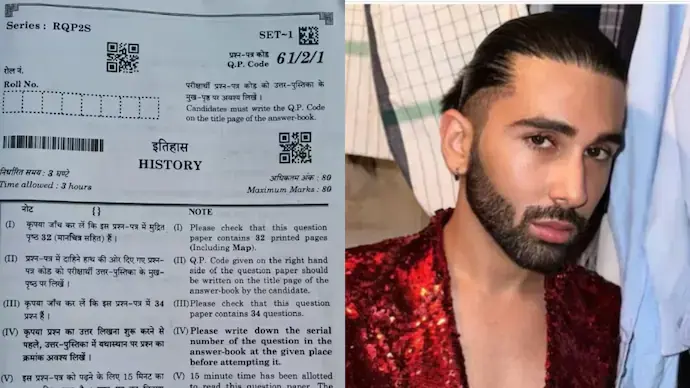
triggered a wave of memes over a QR code that allegedly redirected users to Never Gonna Give You Up, the March 30 History
exam has taken the trend a step further. Students claim that scanning the QR
code on the paper led them to search results featuring socialite and influencer
Orhan Awatramani, popularly known as Orry.
The development quickly gained traction
online, with videos and screenshots flooding platforms as students documented
the unexpected outcome. Independent verification of multiple paper sets
reportedly showed the QR code redirecting to a search page linked to Orry,
turning a routine security feature into viral content.
Adding fuel to the frenzy, Orry himself joined
the conversation. In a video shared on social media, he is seen scanning the
exam paper’s QR code and reacting with disbelief, calling the moment “a dream.”
His caption—likening the CBSE paper to a festive “phuljadi packet”—only
amplified the buzz.
From rickroll to Orry: A pattern emerges
This is not the first time CBSE’s QR codes
have strayed into meme territory. Earlier in March, students scanning codes in
the Mathematics paper found themselves “rickrolled”—redirected to Never Gonna Give You Up, one of the internet’s
most enduring pranks.
At the time, CBSE clarified that the question
paper was authentic and that QR codes are embedded solely as a security
mechanism to verify legitimacy—not to deliver external content. However, the
explanation did little to contain the online frenzy, as students gleefully
shared their experiences.
When high-stakes exams meet internet culture
The incidents have struck a chord largely due
to the stark contrast they present: a high-pressure examination environment
colliding with the unpredictability of internet humour. Designed to safeguard
exam integrity, QR codes have inadvertently become gateways to viral moments.
For students navigating the stress of board
exams, the episodes offered brief comic relief. For the internet, they provided
fresh meme material—bridging classrooms with pop culture in unexpected ways.
No official word yet, but concerns linger
While CBSE has not issued a statement on the
latest incident, its earlier assurance emphasised that exam security and
integrity remain uncompromised. Yet, the recurrence of such episodes has raised
questions about oversight and the robustness of technological safeguards.
A quirky but cautionary moment
From a classic rickroll to an influencer
cameo, CBSE’s 2026 board exams are shaping up to be as memorable online as they
are significant academically.
Behind the humor, however, lies a more serious takeaway: in a system that caters to millions of students, even minor technological anomalies can snowball into nationwide talking points—underscoring the need for tighter checks in an increasingly digital examination framework.