Meghalaya SSLC result 2026 declared: Pass percentage rises to 86.84%, Wangaal Lama tops Class 10
By | Career | 07-Apr-2026 13:04:53
News Story
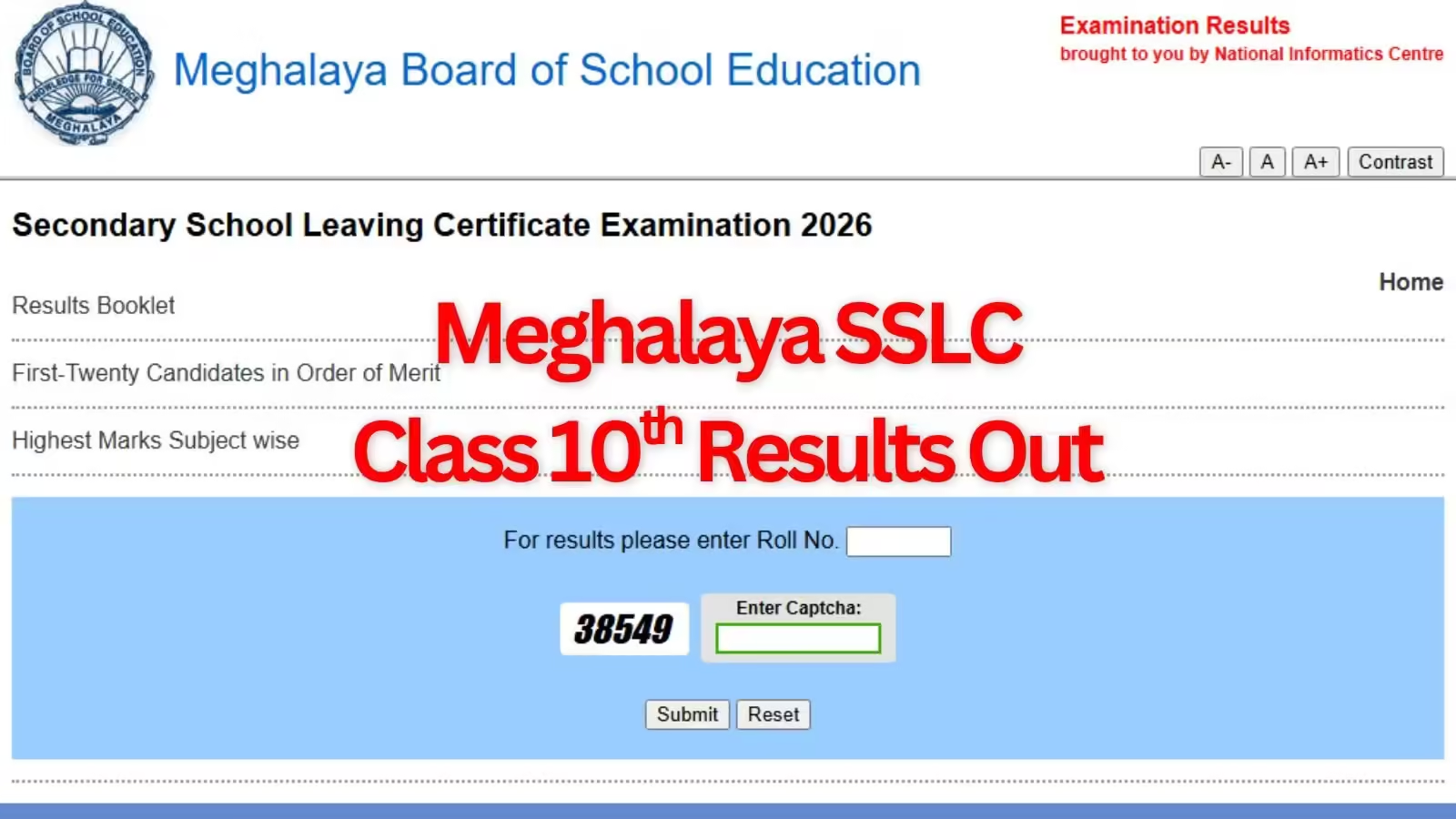
The Meghalaya Board of School Education
(MBOSE) on April 7 announced the Class 10 SSLC Results 2026, recording a strong
overall pass percentage of 86.84%. Students who appeared for the examination
can access their results on the official websites — mbose.in, megresults.nic.in
and mboseresults.in.
According to official data, 48,805 candidates
had registered for the examination, of whom 48,623 appeared. A total of 42,228
students successfully cleared the exam, reflecting a steady performance trend
across categories.
Category-wise performance
shows sharp contrasts
The results reveal significant variation across
categories, with Regular-1 candidates leading the chart:
- Regular-1: 93.30% pass rate
- Regular-2: 80.72%
- Non-Regular: 43.36%
- Private:
45.19%
- Compartmental: 37.52%
- Improvement: 60.00%
The data underscores a strong showing by
regular candidates, while pass percentages remain comparatively lower in
non-regular and compartmental segments.
Merit list sees close
competition at the top
MBOSE also released the merit list alongside
the results, highlighting a tightly contested top bracket. Wangaal Lama secured the first rank with 585
marks, followed by Vishal Kumar with 576
marks.
Several ranks witnessed ties, reflecting
minimal score differences among high achievers. Notable performers include:
- Prajukta Roy and Prinita Das (Rank 3, 575 marks)
- Samdi Mukhim, Nathanael Mantre Laloo and Wandarihun Lyngkhoi (Rank 4, 572 marks)
Schools from Shillong and nearby districts
featured prominently in the top ranks, indicating strong academic performance
from institutions in the state capital region.
Girls outperform boys
overall
Gender-wise analysis shows female candidates
slightly outperforming male students overall. While boys marginally led in the
Regular-1 category with a 93.97% pass rate compared to girls’ 92.84%, the trend
reversed in Regular-2, where girls recorded 80.81%, ahead of boys at 80.60%.
However, in categories such as Non-Regular and
Private, male candidates posted higher pass percentages, pointing to varied
performance patterns across segments.
The 2026 SSLC results reflect consistent academic outcomes with improved overall success rates, even as disparities across categories continue to persist.