Tamil Nadu Medical Colleges Transform MBBS Training with Advanced Simulation Labs
By Administrator | Education | 20-Jul-2026 16:14:09
News Story
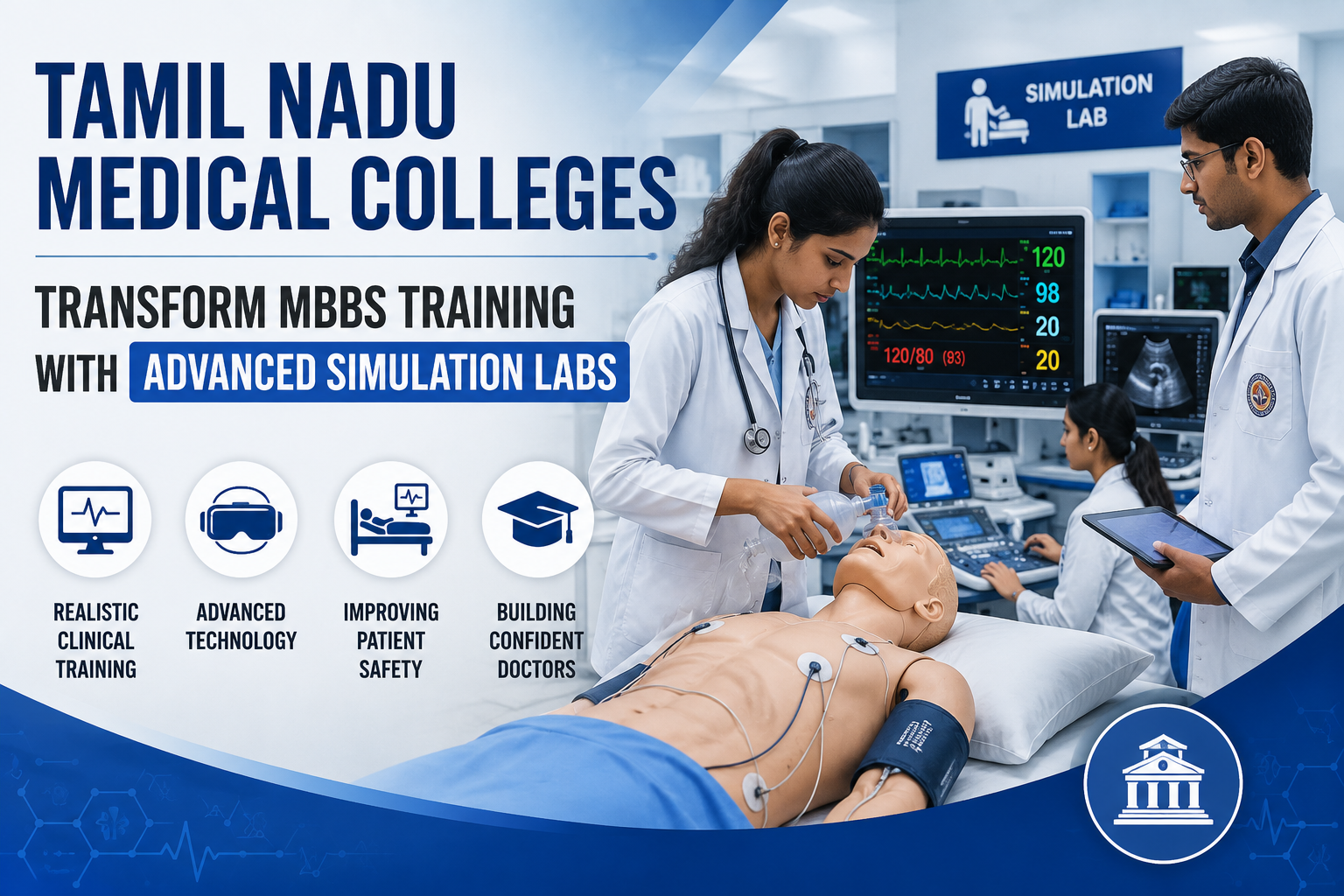
New Delhi: Medical colleges across Tamil Nadu are increasingly adopting advanced simulation laboratories to strengthen practical training for MBBS students. Equipped with high-fidelity mannequins, virtual reality tools, laparoscopic surgery simulators, ultrasound systems, and ICU monitoring equipment, these labs are helping future doctors develop clinical skills in a safe, technology-driven environment before treating real patients.
Simulation-based learning has become an important part of modern medical education, allowing students to practise diagnosing diseases, handling emergencies, and performing medical procedures without risking patient safety. The technology enables repeated practice, immediate feedback, and exposure to real-life clinical scenarios that may not always be available during routine hospital postings.
Realistic Clinical Training Before Patient Care
Unlike conventional classroom teaching, simulation laboratories recreate real hospital settings where students can learn by doing. MBBS students are trained to monitor critically ill patients, perform cardiopulmonary resuscitation (CPR), conduct emergency procedures, interpret diagnostic findings, and improve communication with patients and healthcare teams.
Many institutions have introduced computer-controlled mannequins that can simulate breathing, heartbeats, bleeding, seizures, and other medical conditions. These systems allow faculty members to assess students' decision-making abilities and clinical competence under realistic conditions.
Exposure to Modern Medical Technologies
Medical colleges have also integrated specialised simulators for procedures such as:
Laparoscopic surgery
Ultrasound and sonography
Intensive Care Unit (ICU) monitoring
Airway management
Emergency trauma care
Obstetric and neonatal procedures
These technologies help students gain confidence and improve procedural skills before entering clinical practice.
Improving Patient Safety and Clinical Confidence
Medical education experts believe simulation-based training significantly reduces the chances of medical errors by allowing students to learn from mistakes in a controlled environment. Instead of performing procedures for the first time on patients, students can repeatedly practise techniques until they achieve the required level of proficiency.
The approach also enhances teamwork, communication, critical thinking, and crisis management—skills that are essential for healthcare professionals working in hospitals and emergency departments.
Supporting the Future of Medical Education
With India witnessing rapid advancements in healthcare technology, simulation laboratories are becoming an integral part of competency-based medical education. As medical colleges continue to modernise their infrastructure, such facilities are expected to play a key role in producing better-trained and more confident healthcare professionals.
Tamil Nadu has also continued to expand medical education infrastructure, including an increase in MBBS seats across the state, further strengthening opportunities for aspiring doctors.
Summary
Advanced simulation laboratories are reshaping MBBS training in Tamil Nadu by providing students with realistic, technology-enabled clinical learning experiences. From robotic surgery simulators to ICU monitoring systems and virtual patient scenarios, these facilities are helping future doctors build practical skills, improve clinical decision-making, and enhance patient safety before entering real-world healthcare settings.