Why Higher Education Is Important for Career Growth
By Administrator | Education | 27-Aug-2026 14:43:58
News Story
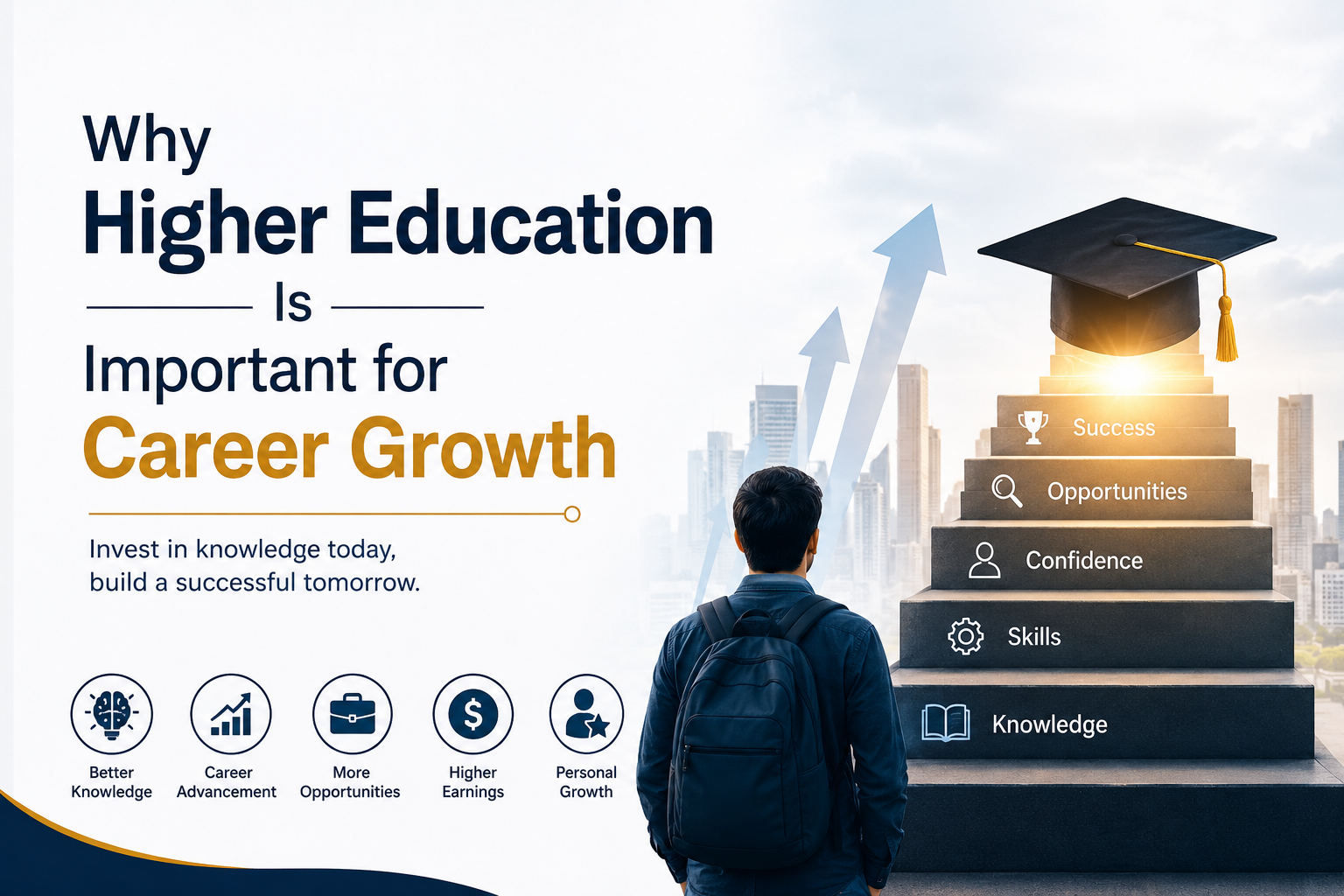
Why Higher Education Is Important for Career Growth
In today’s competitive job market, having the right skills and qualifications is more important than ever. Employers are looking for candidates who have professional knowledge, practical skills, and the ability to adapt to changing industry requirements. This is one of the main reasons why higher education is important for career growth.
Higher education, including undergraduate, postgraduate, diploma, and professional degree programs, helps students develop specialized knowledge and prepares them for better career opportunities. It can also improve earning potential, professional credibility, networking opportunities, and long-term career development.
Whether a student wants to build a career in business, technology, healthcare, education, finance, or another professional field, higher education can provide a strong foundation for success.
What Is Higher Education?
Higher education refers to education pursued after completing school-level education. It generally includes bachelor's degrees, master's degrees, professional courses, postgraduate programs, diplomas, and other specialized qualifications offered by colleges and universities.
Programs such as BBA, BCA, B.Com, BA, B.Sc, MBA, MCA, M.Com, and other professional courses allow students to gain knowledge in specific areas and prepare for employment or further studies.
Higher education is not only about earning a degree. It is also an opportunity to develop critical thinking, communication, problem-solving, teamwork, leadership, and industry-specific skills.
Why Higher Education Is Important for Career Growth
1. Provides Specialized Knowledge
One of the biggest benefits of higher education is the opportunity to gain specialized knowledge. School education provides students with general knowledge, while higher education allows them to focus on a particular field.
For example, a student pursuing a BBA degree can learn about business management, marketing, finance, human resources, and entrepreneurship. Similarly, a student studying BCA can develop knowledge of programming, databases, software development, and information technology.
This specialized knowledge helps students understand their chosen industry and prepare for relevant career opportunities.
2. Increases Career Opportunities
Many professional jobs require candidates to have a specific educational qualification. A higher education degree can make students eligible for a wider range of job opportunities.
Graduates can apply for entry-level positions, professional roles, internships, management trainee programs, and other opportunities depending on their qualifications and skills.
For example, completing a bachelor's degree can open opportunities in areas such as:
Business management
Digital marketing
Information technology
Banking and finance
Human resources
Sales and marketing
Education
Administration
Healthcare management
Therefore, higher education can help students expand their career choices instead of limiting themselves to jobs requiring basic qualifications.
3. Improves Earning Potential
Education and earning potential are often connected because specialized qualifications can help individuals qualify for more skilled positions. As professionals gain experience, additional education and certifications can also support career progression.
A higher qualification may help candidates compete for positions with greater responsibilities. However, salary depends on several factors, including skills, experience, industry, location, job role, and company.
Students should therefore view higher education as a long-term investment in their professional development rather than simply a way to obtain a higher salary.
How Higher Education Helps in Professional Development
4. Develops Communication and Soft Skills
Career success depends on more than technical knowledge. Employers also value communication, teamwork, leadership, time management, and problem-solving abilities.
Higher education gives students many opportunities to develop these skills through:
Group projects
Presentations
Seminars
Classroom discussions
Assignments
Internships
Workshops
College activities
These experiences can help students become more confident and professional when they enter the workplace.
5. Builds Critical Thinking and Problem-Solving Skills
Modern workplaces require employees to analyze situations and find practical solutions. Higher education encourages students to think critically rather than simply memorize information.
Through research projects, case studies, assignments, presentations, and practical activities, students learn how to analyze problems, evaluate information, and make informed decisions.
These skills are useful across almost every industry and can contribute significantly to long-term career growth.
6. Creates Networking Opportunities
Networking is another important advantage of higher education. Colleges and universities bring students into contact with teachers, industry professionals, alumni, entrepreneurs, and fellow students.
These connections can become valuable throughout a person's career.
Students may discover internships, job opportunities, mentorship programs, business ideas, and professional events through their academic network. Building professional relationships early can help students understand industry expectations and make better career decisions.
Role of Higher Education in Career Advancement
7. Helps With Career Specialization
As industries become more specialized, professionals often need specific knowledge to progress in their careers.
For example, someone interested in finance may pursue specialized education in accounting or financial management. A technology professional may choose postgraduate education or certifications in areas such as data analytics, cybersecurity, or artificial intelligence.
Specialization allows professionals to develop expertise in a particular area and potentially qualify for more advanced roles.
8. Improves Professional Credibility
A recognized degree or qualification can demonstrate that a person has completed structured education in a particular field.
For fresh graduates, educational qualifications can be especially important because they may have limited professional experience. A degree can help demonstrate academic preparation when applying for entry-level positions.
However, qualifications work best when combined with practical skills, internships, projects, and relevant work experience.
9. Supports Career Switching
Higher education can also help professionals transition into a new career field.
For example, someone working in a non-technical role may decide to study computer applications or data analytics to move into the technology sector. Similarly, a professional interested in management may pursue an MBA to develop business and leadership knowledge.
Choosing the right course can provide structured learning and help bridge the knowledge gap between an existing career and a new professional field.
Higher Education and the Future of Work
The workplace is changing rapidly because of technology, automation, artificial intelligence, globalization, and evolving consumer behavior. As a result, professionals need to continue learning and updating their skills.
10. Encourages Lifelong Learning
Higher education can develop a mindset of continuous learning. Students learn how to research, analyze information, and adapt to new concepts.
After completing a degree, professionals can continue learning through postgraduate programs, certifications, online courses, workshops, and professional training.
Lifelong learning is increasingly important because the skills required by industries can change over time.
11. Prepares Students for Industry Requirements
Modern higher education programs increasingly focus on practical learning, internships, projects, presentations, and industry exposure.
This can help students understand how theoretical concepts are applied in real-world situations.
For example, a business student may work on marketing projects, while a computer applications student may develop software or website projects. Such practical exposure can make the transition from college to the workplace easier.
How Students Can Make the Most of Higher Education
Simply earning a degree is not always enough for successful career growth. Students should actively use their college years to develop both academic knowledge and practical skills.
Focus on Practical Skills
Students should complement classroom learning with practical skills related to their chosen industry. Digital tools, communication skills, analytical abilities, and industry-specific knowledge can make a significant difference.
Take Internships Seriously
Internships provide an opportunity to gain workplace experience before graduation. Students can understand professional environments, learn from experienced employees, and develop practical knowledge.
Build a Professional Network
Students should connect with professors, alumni, industry professionals, and other students. Participating in seminars, workshops, conferences, and professional communities can help build useful relationships.
Develop a Strong Resume and Portfolio
Students should maintain an updated resume highlighting their education, internships, projects, certifications, achievements, and skills. For fields such as technology, design, writing, and digital marketing, a professional portfolio can also demonstrate practical abilities.
Conclusion
Higher education plays an important role in career growth by providing specialized knowledge, improving professional skills, expanding career opportunities, and helping individuals prepare for an evolving job market.
However, a degree alone does not guarantee career success. Students should combine their education with practical experience, internships, communication skills, networking, certifications, and continuous learning.
Choosing the right higher education program based on career goals and industry requirements can help students build a strong professional foundation. In a competitive employment environment, investing in education and skills can be an important step toward achieving long-term career development and professional success.
SEO Keywords
Primary Keyword: Higher Education for Career Growth
Secondary Keywords:
importance of higher education
benefits of higher education
higher education and career growth
career development through education
importance of a college degree
higher education benefits
professional career growth
higher education for better career opportunities