Why Human Rights Matter in Everyday Life
By | Law | 08-Aug-2026 12:55:16
News Story
Human rights are not only about laws, courts, or government institutions. They are closely connected to how people live, work, study, communicate, and are treated by others. From equal opportunities in education to freedom of expression and protection from discrimination, human rights help people live with dignity and respect.
What Makes Human Rights Important?
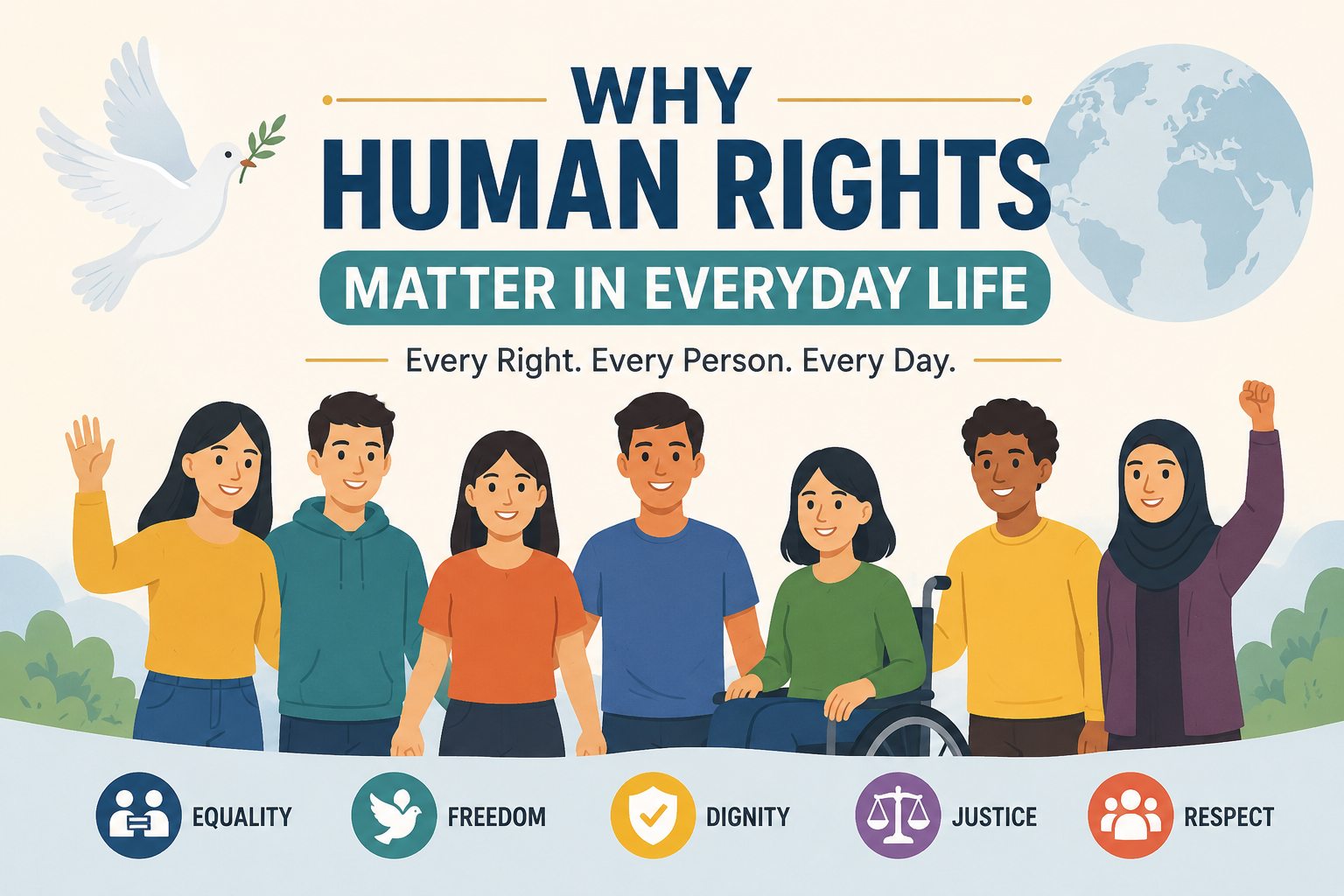
Human rights belong to every person, regardless of gender, religion, caste, nationality, disability, social background, or economic status. They provide a foundation for equality, freedom, dignity, and justice.
When people understand their rights, they are better able to recognise unfair treatment and seek help through appropriate channels.
How Human Rights Affect Our Lives
Equality and Non-Discrimination
Everyone deserves fair and equal treatment. Human rights principles help challenge discrimination based on factors such as gender, caste, religion, disability, or social background.
Freedom and Expression
Being able to express opinions, follow one's beliefs, and participate in society are important freedoms. At the same time, these freedoms should be exercised responsibly while respecting the rights and dignity of others.
Education and Opportunity
Access to education can help individuals develop knowledge, skills, and independence. Human rights awareness also encourages schools and communities to create inclusive environments where students are treated fairly.
Safety and Dignity
People have the right to live free from abuse, exploitation, and degrading treatment. Awareness can help individuals recognise harmful behaviour and understand where they can seek support.
Privacy in the Digital World
With people increasingly using social media and digital services, protecting personal information and respecting online privacy have become important aspects of responsible citizenship.
What Can We Do to Promote Human Rights?
Human rights protection is not only the responsibility of governments and institutions. Individuals can contribute by:
Treating others with dignity and respect.
Standing against discrimination and abuse.
Respecting different opinions and backgrounds.
Protecting other people's privacy.
Supporting equality and inclusion.
Sharing verified information about rights and support services.
Small actions based on respect and equality can contribute to a more inclusive society.
Where Can You Seek Help?
If you believe your human rights have been violated, you should approach the appropriate authority depending on the nature of the issue.
National Human Rights Commission (NHRC)
Website: https://nhrc.nic.in
Online Complaint Portal: https://hrcnet.nic.in
Telephone: 011-24651330
Toll-Free: 14433
Other Important Helplines
National Emergency: 112
Women Helpline: 181
Child Helpline: 1098
Cyber Crime Helpline: 1930
Free Legal Aid (NALSA): https://nalsa.gov.in
Conclusion
Human rights help create a society where people are treated fairly, protected from discrimination, and able to live with dignity. Knowing your rights is important, but respecting the rights of others is equally essential.
Disclaimer: This article is intended for educational and public awareness purposes only and should not be considered legal advice. For specific concerns, contact the relevant government authority or a qualified legal professional.